
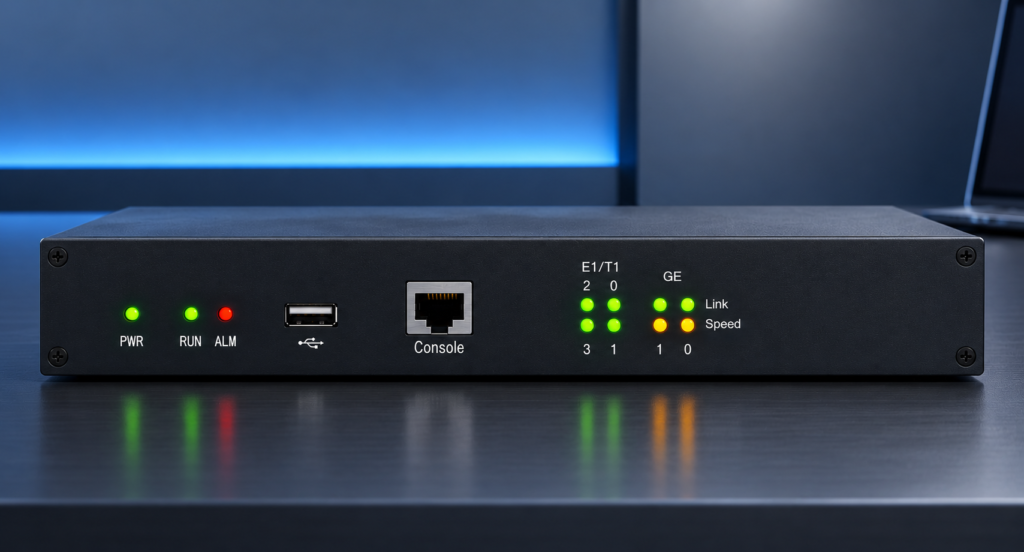
A Digital VoIP Gateway connects traditional digital telephony networks with modern IP-based communication systems. It enables businesses to integrate E1, T1, or PRI connections with SIP-based IP PBXs, softswitches, and VoIP platforms, making communication infrastructure easier to modernize and manage.
Key Features of a Digital VoIP Gateway
- E1, T1 & PRI Support for digital telephone networks.
- SIP Compatibility for IP PBXs and VoIP platforms.
- Flexible Call Routing for efficient call management.
- Voice Codec Support for reliable IP voice transmission.
- DTMF Support for IVR and keypad functions.
- Echo Cancellation for clearer and more stable voice communication.
- Number Manipulation for flexible caller ID and dial-plan management.
Benefits of a Digital VoIP Gateway
A Digital VoIP Gateway helps businesses modernize their communication while making better use of existing telephony infrastructure.
Key benefits include:
Seamless VoIP Integration
Connect existing digital telephony infrastructure with modern IP communication systems without replacing the entire setup.
Cost-Effective Communication
Use IP networks for voice communication and potentially reduce traditional telephony costs, particularly for multi-location and long-distance calling.
Protects Existing Infrastructure
Extend the usability of existing PBXs and digital trunk connections while gradually adopting VoIP technology.
Easy VoIP Migration
Support a phased transition from traditional telephony to IP-based communication with minimal disruption.
Flexible Call Management
Simplify call routing, number manipulation, and connectivity between digital trunks and SIP-based systems.
Supports Business Scalability
Accommodate growing communication requirements by integrating additional users, branches, trunks, or IP-based services.
Centralized Management
Manage communication connectivity and gateway configurations through a centralized web-based interface.
Use Cases of a Digital VoIP Gateway
A Digital VoIP Gateway can be deployed across different communication environments where traditional digital telephony needs to connect with modern IP-based systems. Common use cases include:
Legacy PBX to VoIP Migration
Connect existing E1/T1-based PBX systems with SIP-based IP networks without replacing the complete telephony infrastructure.
Enterprise Branch Connectivity
Connect digital telephony systems across multiple offices and branches, supporting centralized and IP-based communication.
SIP Trunk Integration
Connect traditional digital telephone networks with SIP trunks, IP PBXs, and other VoIP platforms for flexible voice connectivity.
Call Center Communication
Integrate digital telephone lines with IP-based call center systems to support centralized calling and efficient call management.
Telecom & Service Provider Networks
Connect PSTN infrastructure with SIP networks and support different digital trunk requirements across telecom and service provider environments.
Hybrid Telephony Environments
Allow legacy PBXs, digital trunks, and IP-based communication systems to work together within the same network.
Why Choose Dinstar?
Dinstar offers a wide range of VoIP and communication products designed to support different business and telecom requirements. Its portfolio includes IP PBXs, VoIP Gateways, SBCs, and other communication solutions for flexible and scalable deployments.
Among these solutions, Dinstar Digital VoIP Gateways help connect traditional E1/T1 and PRI-based telephony networks with modern IP-based communication systems, supporting seamless integration and efficient communication.

